

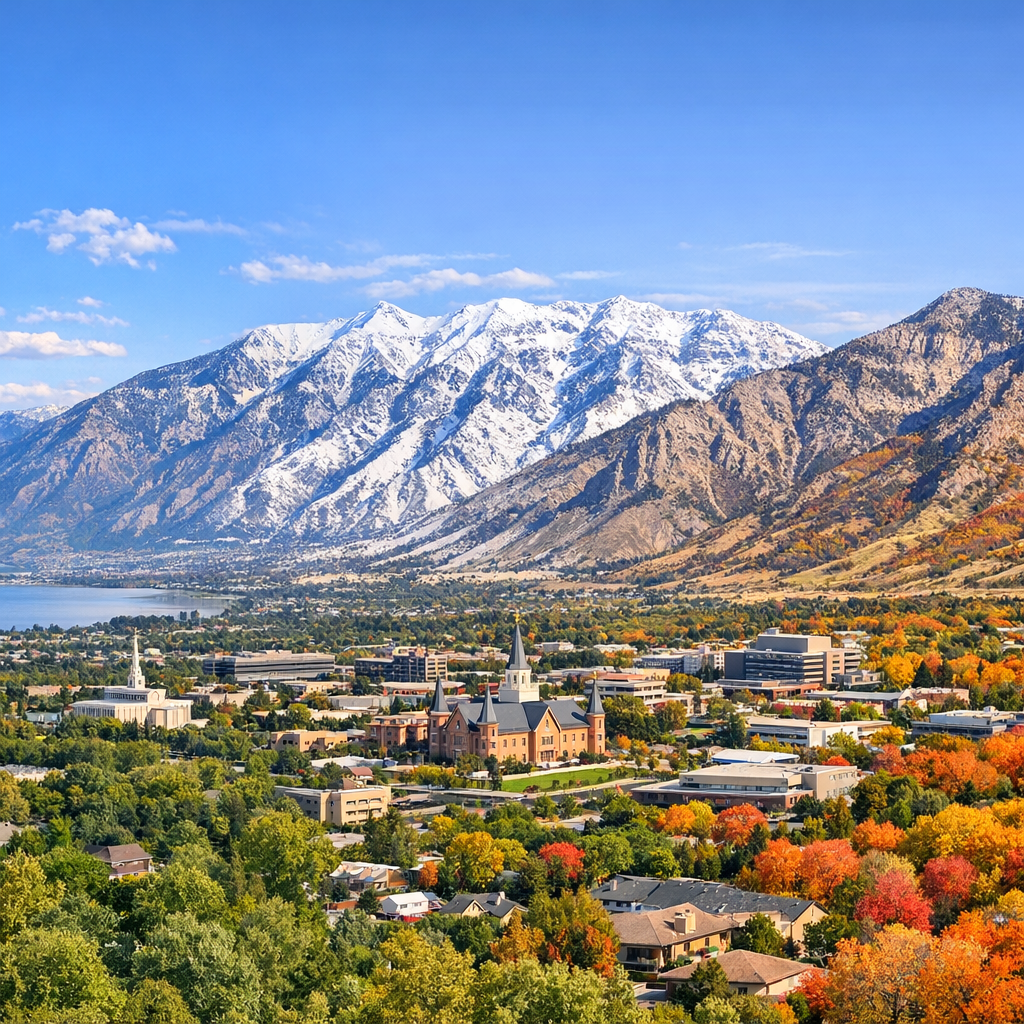
Provo, Utah, nestled along the Wasatch Front, experiences a diverse climate characterized by distinct seasonal variations. Understanding these patterns can help residents and visitors make the most of what each season offers.
Summer: Warm and Dry
Summers in Provo are typically hot and dry, with average high temperatures reaching around 90°F (32°C) in July. The season spans from early June to mid-September, offering ample opportunities for outdoor activities. Rainfall during this period is minimal, contributing to the arid conditions.
Autumn: Mild and Crisp
Autumn brings a gradual cooling, with September averaging highs of 74°F (23°C) and November dropping to around 45°F (7°C). This season is marked by increasing humidity and slightly more precipitation, making it a pleasant time for hiking and enjoying the fall foliage.
Winter: Cold and Snowy
Winters are cold, with average lows dipping to 15°F (-9°C) in January. Snowfall is common, averaging 57 inches annually, providing excellent conditions for winter sports enthusiasts. The cold season lasts from late November to late February.
Spring: Warming Up
Spring sees a gradual warming trend, with April averaging highs of 63°F (17°C). This season also brings increased precipitation, supporting the blooming of local flora and making it an ideal time for gardening and outdoor activities.
Environmental Considerations
Provo’s climate also influences environmental factors such as air quality. The Salt Lake City-Provo-Orem area has been ranked among the worst in the U.S. for ozone pollution, which can impact respiratory health. Residents are encouraged to stay informed about air quality indices, especially during the summer months when ozone levels can be higher.
By understanding Provo’s climate patterns, individuals can better plan their activities and take necessary precautions to stay comfortable and healthy throughout the year.